
ValidationLab Report
Recipe Ingredient Extractor from Video & Web URLs
Generated Apr 6, 2026 · 11:49 AM · 1m 49s
★★★☆☆
Problem
Saving recipes from TikTok, Instagram, and blogs is easy, but manually transcribing ingredients into a shopping list is a massive pain, often requiring scrubbing through videos or parsing dense text, wasting time and causing frustration.
Solution
Paste a TikTok link or website URL into the app; it parses the content, extracts ingredients, infers quantities, and sorts them into supermarket aisles. Users can also type a messy ingredient list, and the app organizes it.
Analysis Summary
Founder Profile
An ideal operator profile would be a product-focused individual with strong technical skills in natural language processing and data extraction, coupled with a deep understanding of consumer behavior in the food and recipe space.
Model
SaaS. Subscription with scalable growth potential.
Purpose
Effortlessly transform recipe links (TikTok, Instagram, blogs) into organized, aisle-sorted shopping lists, eliminating manual transcription and saving time for home cooks.
Core Output Components
Strong on audience clarity and problem urgency, but falls short on solution moat, market demand, and business model, indicating a tough path to profitability.
Clarity Score Meter
Developing
50
A practical utility solving a real annoyance, but faces significant challenges in market demand and business model viability as a standalone B2C SaaS.
Founder Compatibility for You
This opportunity is strategically weak for an execution team aiming for a standalone B2C SaaS. While the core technology is useful, the market is saturated with free alternatives and integrated features within larger recipe or shopping list apps. To improve, consider pivoting to a B2B model, licensing the parsing technology to existing recipe platforms or grocery delivery services, or integrating it as a premium feature within a broader meal planning or grocery management ecosystem. This would leverage the core tech without fighting the uphill battle of B2C SaaS acquisition and retention for a niche utility.
Market Sizing
Shows the scale of the opportunity your venture is addressing. It helps demonstrate the potential impact of your idea and clarifies how much room there is to grow. By defining the total market and the portion you can realistically capture, market sizing reinforces the business case for your solution and supports the credibility of your growth projections.
Total Addressable Market
$5.99 Billion - $11.98 Billion
The total global market for home cooks who use digital recipes and could benefit from ingredient extraction.
Serviceable Available Market
$598.8 Million
The reachable market of English-speaking home cooks actively seeking digital recipe solutions.
Serviceable Obtainable Market
$2.99 Million
The realistic market share this startup could capture in the first 1-3 years with a focused effort.
Unit Economics
Lifetime Value (LTV)
$119.76
Customer Acquisition Cost (CAC)
$40
The Five Dimensions
Audience Clarity
Do we know exactly who pays you?
Understand exactly who your customers are, what they value, and why they would pay for your product or service. The clearer you are about your audience, the easier it is to tailor marketing and sales to them.
Ideal Customers

Sarah Chen
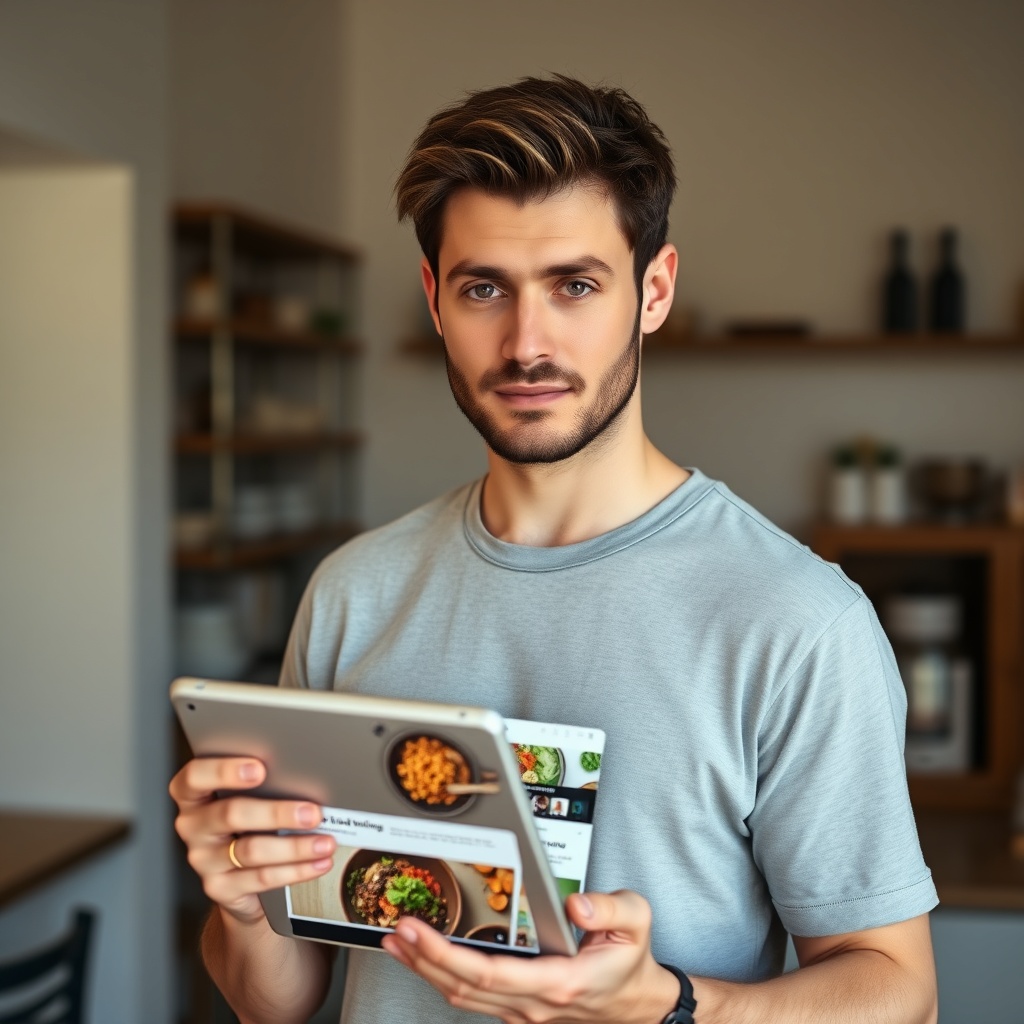
Marc Dubois

Aisha Khan
📱 Access Channels
Many home cooks find recipes here. The app helps them save ingredients easily.
💰 Spending Behavior
Home cooks regularly spend on groceries and kitchen tools. They value convenience and time-saving solutions.
💖 Buying Motivation
They buy to simplify cooking, reduce stress, and manage their shopping more efficiently. Time is a key factor.
Problem Urgency
Do they need this solved now?
⏳ Frequency of Pain
Daily Occurrences: Frequent
Manually transcribing ingredients is a common, recurring task for home cooks who use digital recipes.
🚨 Immediate Consequence
Not solving this means wasted time, manual effort, and frustration when planning meals and shopping.
😤 Emotional Weight
The problem causes annoyance and can make meal planning feel like a chore instead of an enjoyable activity.
🚀 Timing Momentum
The rise of short-form video recipes on platforms like TikTok and Instagram makes this problem more common now.
Solution Fit
Does this make their life easier?
⚡ Speed to Relief
Seconds Instant Conversion
The app quickly extracts and organizes ingredients from a link or text, offering fast relief from manual work.
🧘 Effort Required
Users only need to paste a link or type text, making it very easy to start using the solution.
🔁 Switching Friction
Manual Transcription
Recipe Ingredient Extractor from Video & Web URLs
It's easy for users to switch back to manual methods or use other free tools, as there's low commitment.
✅ Trust Certainty
Users might worry about the accuracy of ingredient extraction, especially for specific quantities or dietary needs.
Market Demand
Is money already moving here?
🪙 Active Category Spend
Total Addressable Market: $5.99 Billion - $11.98 Billion
While the overall recipe app market is large, willingness to pay for a single utility feature is low.
🧠 Competitive Weakness
The market is full of free alternatives and integrated features within larger recipe or shopping list apps.
📊 Growth Signals
Online grocery shopping is growing, which could indirectly boost demand for digital shopping list tools.
🗃️ Category Legibility
The idea of recipe apps and shopping lists is well understood, but this specific feature is often free.
Business Model
Can you profit consistently?
💵 Pricing Feasibility
Value Delivered: Time-saving, organized shopping lists
Price point: $59.88/year
Value Ratio: Low
A B2C SaaS model for a niche utility struggles with perceived value at this price point, leading to high churn.
♻️ Revenue Recurrence
While a subscription aims for recurring revenue, the high churn risk for a utility app makes it unstable.
💹 Margin Efficiency
Net Margin 10%
Gross margin 60%
The LTV:CAC ratio is barely 3:1, indicating that profitability will be challenging due to high acquisition costs.
📣 Distribution Feasibility
Scaling B2C SaaS requires significant marketing spend, which is difficult for a niche utility with low LTV.
Deep Insights
Real Problem Signals
Grocery list auto-population is unreliable and frustrating.
"Ok I just had this happen yesterday. No rhyme or reason as to why some meals populated the list and others didn't. I even went slow for each one and MADE SURE to check the box and then after each meal, checked the list. It did about half of them which is worst than non at all! Very aggravating, this is the MAIN REASON I wanted it."
Plantoeat
Limited free imports feel like a 'bait and switch'.
"The free plan restricts you to eight “smart” imports before you need to pay which feels a little like a ‘bait and switch’ since the main premise of the app is recipe importing and storage."
Difficulty sending recipes to grocery list.
"I’m having trouble sending my recipe to grocery list. I did it before. What am I doing wrong?"
Fitnessblender
Inconsistent grocery lists lead to missed items or duplicates.
"Inconsistency between the grocery lists and the menu. Either foods are missed on the grocery list and then I find out I don't have them later in the week when it's time to make a recipe, or there are excessive/duplicate things listed in the grocery list that aren't used in the recipes that week and I end up buying more than I needed to."
Mealhuddle
Lack of multi-user support causes shared account issues.
"When an app has no multi-user support, couples resort to sharing a single account. Both people log in with the same email and password. It sort of works — until one person deletes a recipe the other was planning to make, or edits the grocery list while the other is shopping from it."
Problem Pattern Analysis
Unreliable List Generation
People get frustrated when apps don't reliably create grocery lists from recipes, leading to missing items or extra trips.
No Shopping List Customization
Users want to organize their shopping lists their own way, but apps often lack options to change categories or item order.
Poor Recipe-to-List Flow
Users struggle with apps that make it hard to send recipes to a grocery list or have inconsistent features.
Revenue Snapshot
Estimated Revenue Benchmarks project Recipe Ingredient Extractor from Video & Web URLs's 3-year growth using IBISWorld, Statista, pricing models, and founder capacity to show how your business compares to industry norms.
3-Year Revenue Projection
$2.99M
Year 1 (Conservative Start)
49,933 users x $4.99/month
$3.28M
Year 2 (Steady Growth)
54,727 users x $4.99/month
$3.59M
Year 3 (Scaling Up)
60,002 users x $4.99/month
High-Confidence Growth Assumptions
Market-Based Assumptions
Industry Growth Rate
9.60% CAGR
High ConfidenceUser Acquisition
CAC: $40, LTV: $119.76 (LTV:CAC ~3:1)
Medium ConfidenceConversion Rate
1.5% from free to paid
Low ConfidenceFounder Capacity Model
Solo Founder (Year 1)
Focus on building the core product and getting initial users. Limited marketing spend.
ConservativeScale Phase (Year 2-3)
Grow the team to add more features and reach a wider audience. Increase marketing efforts.
Growth ModeEditable Assumptions
All projections adjustable based on real data and market feedback.
FlexibleData Sources:
Competitor Scan
Samsung Food (Whisk)
A recipe and meal planning app that helps users discover recipes and plan meals.
Competitor Gap
Samsung Food (former Whisk) has an awful UX and the shopping list does not take into account my pantry.
KitchenPal
An app focused on pantry management, meal planning, and creating grocery lists.
Competitor Gap
KitchenPal also has an awful UX and ...
Recipe Keeper
Helps users organize recipes, create shopping lists, and plan meals.
Competitor Gap
It gets exhausting deleting all the ingredients that I already have in my pantry, so hopefully that feature of adding 'already in my pantry' button to my recipe ...
Cozyla
A meal planning app designed to help users manage their recipes and grocery needs.
Competitor Gap
I can't organize or sort my recipes, it can't get rid of the pre loaded stuff I'll never ...
Recipe Ingredient Extractor from Video & Web URLs's Key Differentiators
Video & Web Extraction
Automatically pulls ingredients from TikTok, Instagram, and blog links, unlike most apps.
Smart Ingredient Sorting
Organizes extracted ingredients into supermarket aisles for easier shopping.
Messy Text Input
Can clean up and organize even poorly formatted, typed ingredient lists.
Time-Saving Automation
Reduces manual transcription and organization, a common pain point for home cooks.
Frankenstein Solutions
People often piece together different apps and manual steps to manage recipes. They might screenshot videos, copy-paste text into a notes app, or type ingredients into a separate shopping list app. This patchwork approach is slow and error-prone.
Notes App (e.g., Apple Notes, Google Keep)
Store copied text or screenshots of ingredients.
No verbatim quote available from provided sources.
Screenshot Tool
Capture recipe steps or ingredient lists from videos.
No verbatim quote available from provided sources.
Manual Typing into Shopping List
Convert visual/text recipes into an organized list.
No verbatim quote available from provided sources.
Problem Pattern Analysis
Proven Demand
Users are already trying to solve this by using multiple tools, showing they need a better way.
Clear Opportunity
The gap is in bringing all these steps into one smooth, automated process.
Competitive Advantage
Recipe Ingredient Extractor from Video & Web URLs wins by offering a single, smart solution that automates the whole process, saving time and frustration.
Validation Experiments
Landing Page & Waitlist Test
Goal
Gauge interest & willingness to pay for the app
Method
Simple landing page with value proposition, pricing tiers, email signup
Success Metrics
- Email sign-up conversion rate above 5%
- Number of users selecting paid tiers (even if not charged)
- Qualitative feedback on perceived value
Concierge Ingredient Extraction MVP
Goal
Validate problem urgency and solution value directly
Method
Manually extract and organize ingredients for 5-10 users from their URLs
Success Metrics
- User feedback on time saved and accuracy of lists
- Expressed willingness to pay for the service after manual delivery
- Number of repeat requests from initial users
Targeted User Interviews
Goal
Understand deep pain points, existing workarounds, and pricing sensitivity
Method
Interview 15-20 home cooks about their recipe saving and shopping list habits
Success Metrics
- Identify 3+ common 'Frankenstein' solutions users currently employ
- Discover specific frustrations with current methods
- Gauge acceptable price points for a dedicated solution